
SOCIAL ASSISTING ROBOTS · PEDIATRICS
Bring Physical AI to the bedside: engage with the child, watch over the ward, close the distance to the parent, and turn quiet attention into signal the team can act on.

SOCIAL ASSISTING ROBOTS · PEDIATRICS
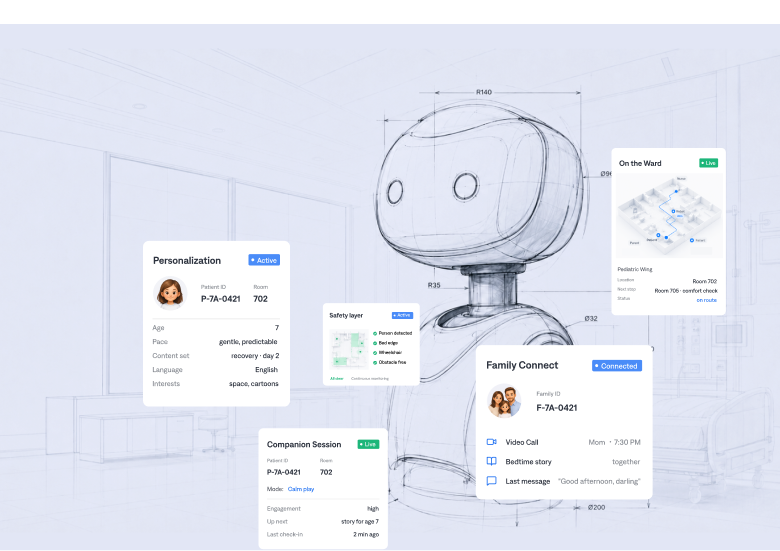
Your companion that reads the hospital room and understands healthcare
Bring Physical AI to the bedside: engage with the child, watch over the ward, close the distance to the parent, and turn quiet attention into signal the team can act on.
See how it works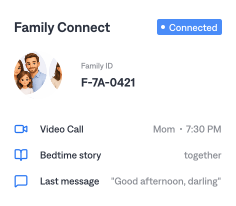
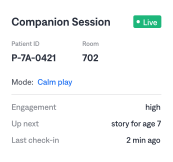
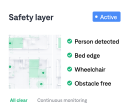
THE PEDIATRIC GAP WE CLOSE
Recovery doesn't keep office hours
A children's ward never really sleeps. The child, the team, and the parent each feel that most in the hours no one is scheduled for.
The child is rarely at ease
A hospitalized child's nights are broken and the days drag between treatments. That strain raises pain and slows recovery.
The care team is spread thin
Staffing runs leaner overnight and stretched thin by day. Either way, there is less time for the calm bedside attention a child needs.
The parent can't always be there
Work, distance, and other children keep many parents away at all hours. Children without someone nearby face higher readmission and more pain.
THE SOLUTION AT THE BEDSIDE
When a companion robot comes along
It's not a screen on wheels. It's not a general-purpose toy. It's an embodied Physical AI companion: physically present, emotionally aware, and clinically informed. One presence on the ward, built to serve the child, the care team, and the parent at once.
For the Child
/01
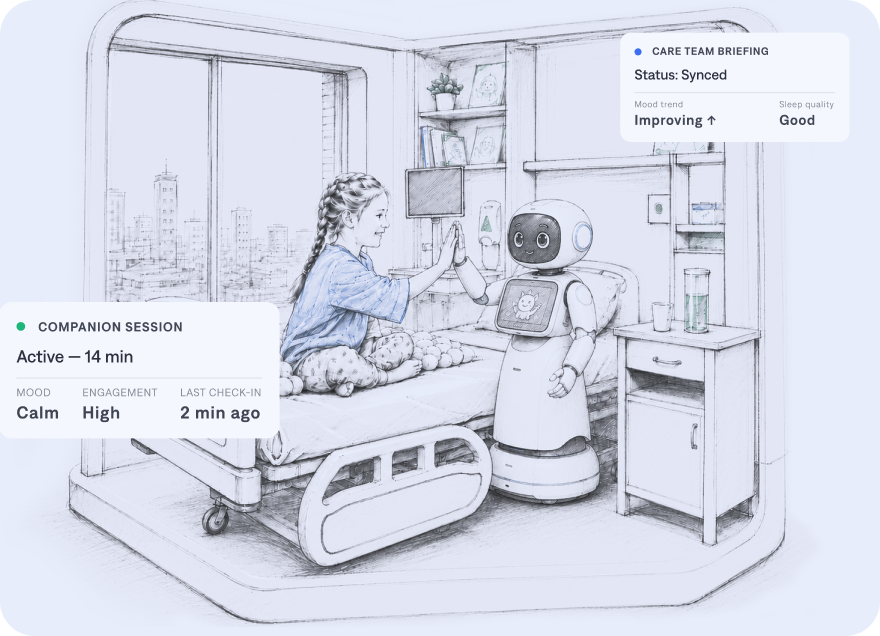
A friendly companion by the bedside:
there between visits and treatments, so the room feels less lonely and a lot less scary.
Play that fits the child, not the other way around:
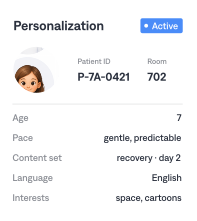
stories, games, and activities that adapt to each child’s age, mood, and what their day looks like.
School that comes to the bed:
gentle, screen-based learning that helps kids keep up and hold onto a sense of normal life while they heal.
For the Care Team
/02
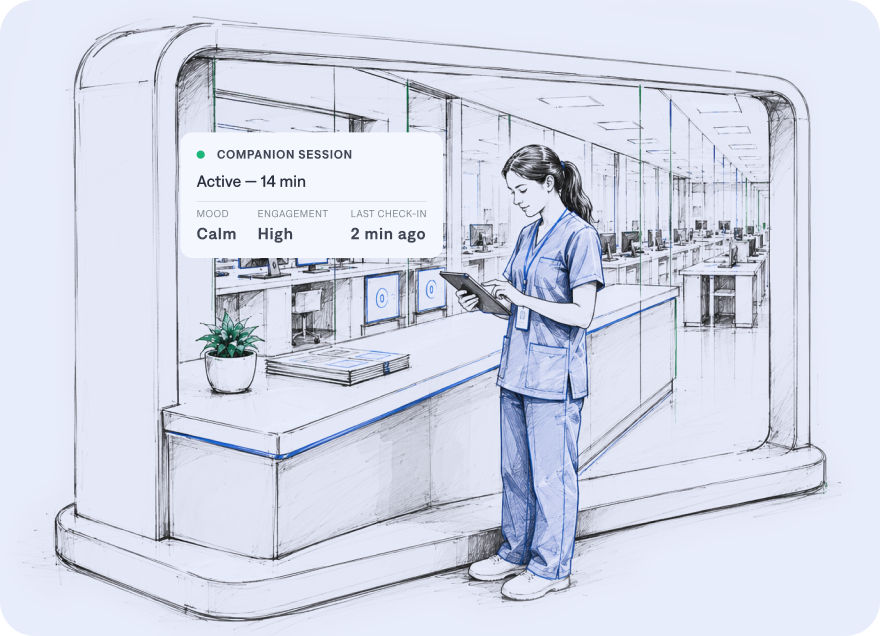
Gives time back at the front line:
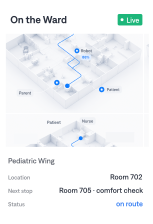
handles light welcome, identification, and wayfinding moments so clinicians and nurses can stay on direct care.
A gentle extra set of eyes:
notices cues about a child’s mood and engagement and passes them to the team as simple notes to review; it supports clinical judgment and is never a diagnosis.
Pre-round briefing, ready when you are:
brings the day’s context together so the team walks in already up to speed, with people always making the call.
For the Parents
/03
A video bridge from bedside to your device:
see and talk with your child, even when you can’t be in the room.
Share the small moments:
read a bedtime story, say goodnight, be there for the ordinary moments that matter most to a child from wherever you are.
Stay informed between visits:
gentle updates on how your child’s day is going, so being away feels less like being in the dark.
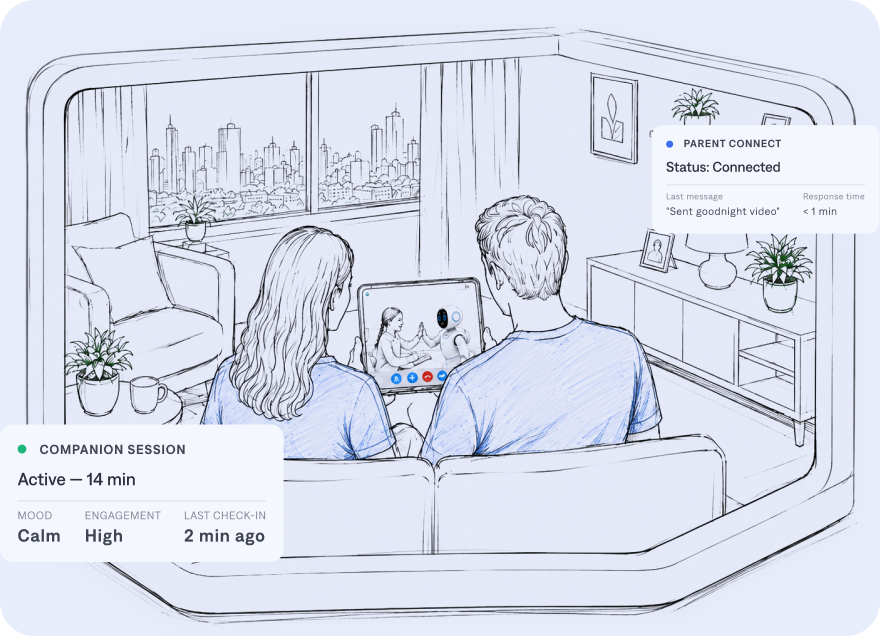
The companion is a Physical AI platform, not a fixed list of functions. New skills arrive as software, so what your ward needs next becomes what the companion does next.
THE EVIDENCE
The science is catching up to what families already feel
Across randomized trials and working hospital deployments, researchers are finding that a companion presence helps children through hard days.
A 2025 meta-analysis of 13 randomized trials found socially assistive robots deliver a statistically significant reduction in pain among hospitalized children, making it a promising nonpharmacological adjunct for pediatric pain management.
DOI: 10.2196/76427 · Nov 2025
Across 10 randomized trials, socially assistive robots significantly reduced anxiety and distressed-avoidance behaviors during needle-based procedures such as IV placement, blood sampling, and vaccination.
DOI: 10.1186/s12887-024-05116-z · Oct 2024
The first systematic review of social robots in pediatric clinical care found anxiety and distress were reduced in children who interacted with a robot.
DOI: 10.1136/archdischild-2020-320721 · Nov 2021
In a randomized clinical trial, children who played with a social robot in the emergency department showed a significantly greater drop in salivary cortisol (an objective, biological marker of reduced stress) than children comforted by a nurse or a parent.
DOI: 10.2196/29656 · Jan 2022
In a randomized trial during flu vaccination, children who interacted with a humanoid robot showed significantly less pain and distress across child, parent, nurse, and researcher reports.
DOI: 10.1016/j.vaccine.2013.03.056 · May 2013
In a randomized trial of children recovering from day surgery, those supported by an interactive robot had significantly lower pre-mobilization anxiety and mobilized longer, with high parent satisfaction.
DOI: 10.1016/j.pedn.2022.11.009 · Jan 2023 (Epub Nov 2022)
WHAT L37 ACTUALLY BRINGS
We don’t build robots. We make them clinical.
Hospitals shouldn't have to bet on one machine and hope it ages well. L37 is built the opposite way. We own the intelligence and the service, stay independent of any single manufacturer, and keep the companion current long after the day it arrives.
It arrives ready, not as a purchase
The companion shows up integrated, tested, and clinically onboarded. It is delivered as a service, not shipped as a product for your team to stand up.
It gets better without changing
New skills, languages, and therapeutic content arrive as software, over the air. The robot on your ward keeps growing without a new purchase order.
It never becomes obsolete
Because L37 stays independent of any single manufacturer, when a better platform emerges we can move your service onto it. The companion your children know stays the same, even as the machine underneath it improves.
One team stands behind all of it
From the first pilot through every update and swap, the hospital has a single accountable partner in L37, not multiple vendors pointing at each other.
PLANS
One managed subscription with hardware, software, support and content
One predictable monthly cost per ward. Cancel anytime. Hardware swaps covered. No capital purchase.
Pilot
Foundation-funded
Foundation-funded entry point — prove the value on one ward before committing budget.

3-month deployment on one ward
One robot, partial service active
Outcomes report and case study
Pilot credit converts to Ward Standard
Ward Standard
MOST CHOSEN
Per ward · monthly
The primary tier. All six service pillars with full service guarantees and 24/7 coverage of one pediatric ward.
All service active
Hardware Swap SLAs
EHR integration and Family App
Quarterly clinical success review
Network enterprise
Custom framework
For public health systems and children’s hospital networks. White-label available.
Volume pricing from five wards
3–5 year framework agreement
Network-wide EHR integration
Population health data rights
WHERE THIS GOES
Many robots. One brain.
You begin with the companion, everything it learns stays in a shared knowledge graph. Over time, more robots can plug into that same brain, whether they come from L37 or already work on your ward, and each one arrives knowing the ward instead of starting over.
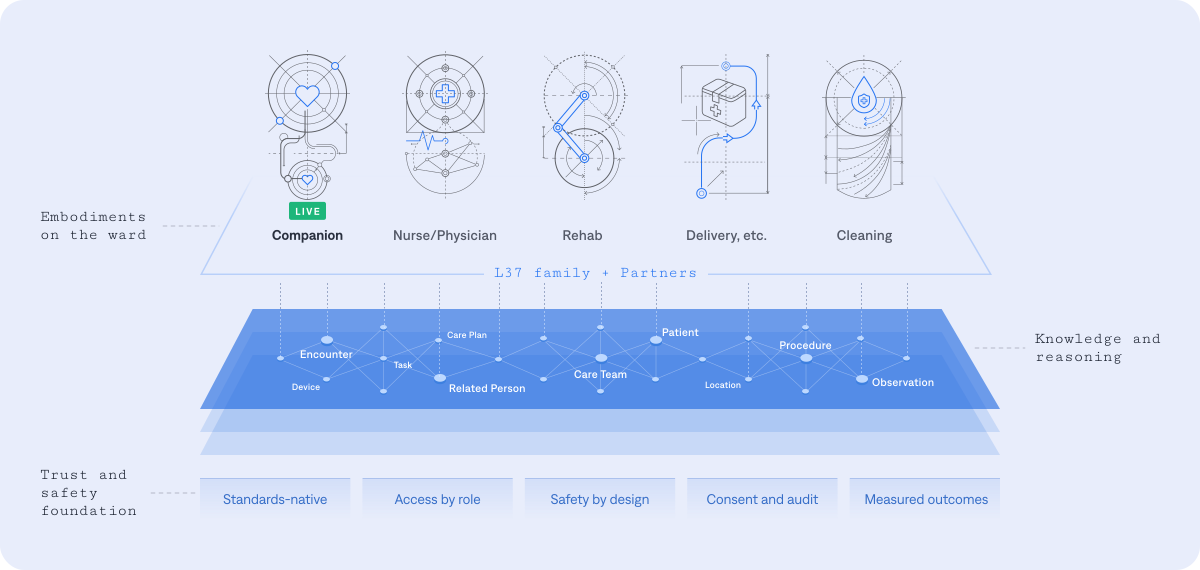
You can stay with one companion for as long as you like. If you ever want more, it is already connected.
Get in touch
Bring the L37 companion robot to your ward
We're selecting the first 25 pediatric wards. Founding members lock in founding terms and shape the roadmap.