
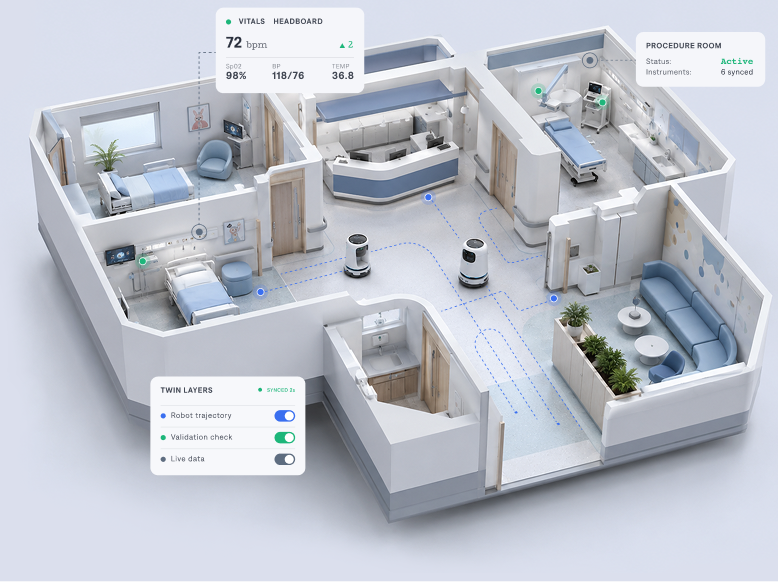
Your hospital running in parallel, virtual, validated, always on
From photorealistic capture to live supervision, we simulate robots, data flows and patient pathways, validate with a Quality Index, and optimise everything in your hospital or clinic.
Book a 30-min discovery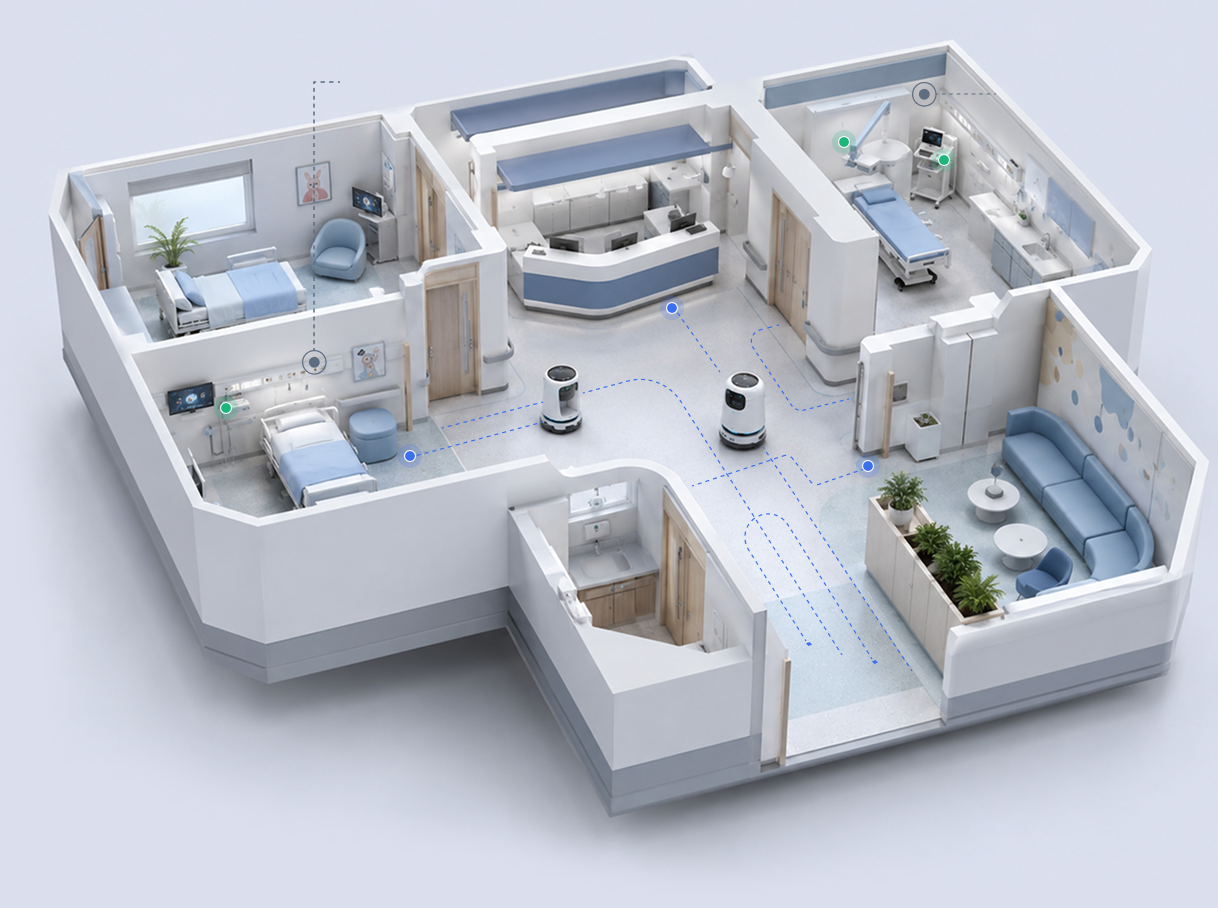
10×
faster time-to-value vs building in-house
15–30 days
CAD-first onboarding to a live environment
100% validated
every twin ships with a signed sim-to-real report
ARCHITECTURE
Hospital Physical AI Layered Architecture
L37 turns robot deployment from a multi-year risk into a validated rollout. Our hospital digital twin platform spans Layers 1–4, integration, simulation, decision-making and supervision, so you validate in simulation before you commit capital to the floor.
L37 hospital digital twin
knowledge graph spans every layer
LAYER /01
Visualisation & supervision
live twin viewer & ops supervision
EXPERIENCE
L37 extends
LAYER /02
Decision-making & optimisation
graph-driven optimisation
INTELLIGENCE
L37 extends
LAYER /03
Simulation & validation
photorealistic sim · sim-to-real validation
SIMULATION
L37 core
LAYER /04
Data connectivity & integration
hospital data in · OpenUSD twin out
INTEGRATION
L37 core
LAYER /05
Data generation & capture
sensors · robots · scans
PHYSICAL
hospital & OEM own
L37 — spans layers 01–04 (core + extends)
partner-owned — hospital & OEM (layer 05)
WHY L37
A digital twin built for healthcare,
not adapted to it
Regulatory pressure on healthcare robotics is tightening through 2026–2027, yet no off-the-shelf, healthcare-native, regulator-ready twin exists.
Today's three options

Build in-house
A multi-year, multi-disciplinary build, and it still ages.
Buy generic tools, used raw
Powerful engines, no clinical content, no validation, no hospital library.
Skip simulation
Train on production patients, slow, risky, non-compliant.
VS
L37 — a fourth option

Healthcare-native
Clinical workflows, infection-control zones and equipment taxonomies pre-modelled.
Ontology-led
A knowledge graph binds every asset, zone and workflow to meaning a robot can reason over.
Evidence packaged
Signed Validation Report with every twin — Quality Index and V&V40-aligned evidence.
Built to operate
One subscription spanning capture, simulation, validation and live supervision.
HOW IT WORKS
From hospital floor to a validated digital twin, in five phases
L37 collapses a multi-vendor, 18-month build into a single repeatable pipeline, delivered as a subscription and signed off with a validation report.
/01
Physical capture
We scan the facility to millimetre accuracy, capturing every room, corridor and fixed asset exactly as built.
/02
Clean & structure
The raw scan is cleaned, aligned and automatically sorted into recognisable rooms, equipment and zones.
/03
Building model
The scan becomes an accurate, editable building model that plugs into your existing CAD and BIM systems.
/04
Physics & realism
Real world physics, including weight, friction, materials and lighting, are applied so the twin behaves like the building, not just looks like it.
/05
Validation & go-live
Robots and clinical workflows are trained and stress-tested in the twin, then signed off with an auditable validation report before anything reaches a patient.
WHY IT GENERALISES
More than geometry:
a Clinical Knowledge layer
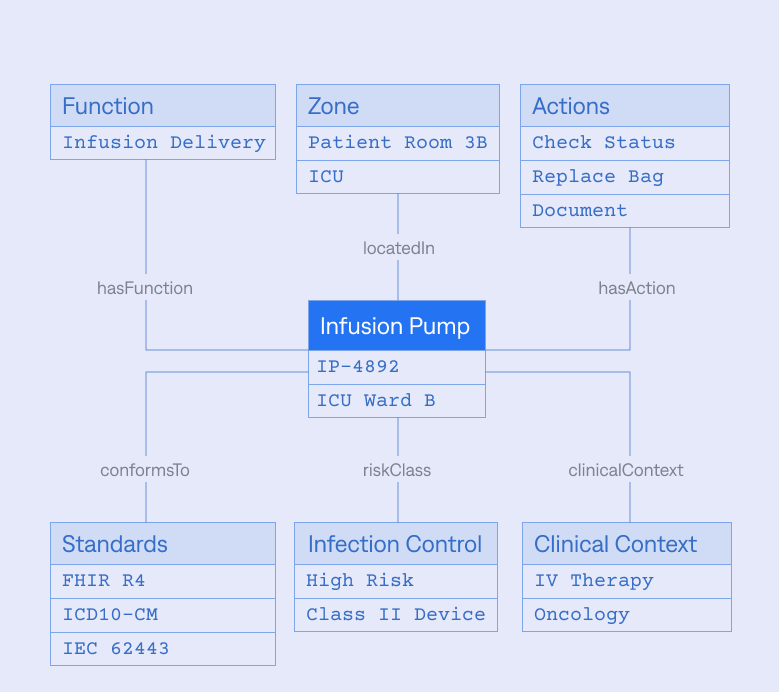
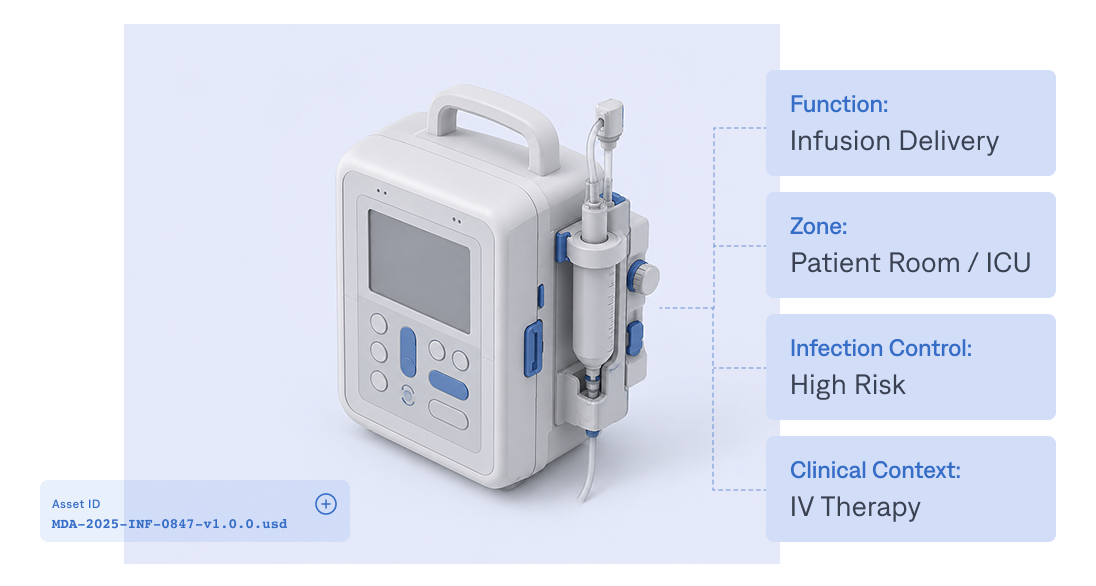
A photorealistic twin is geometry. L37 binds that geometry to a clinical-operational ontology held in a knowledge graph, so every object, zone and workflow carries meaning a robot can reason over.
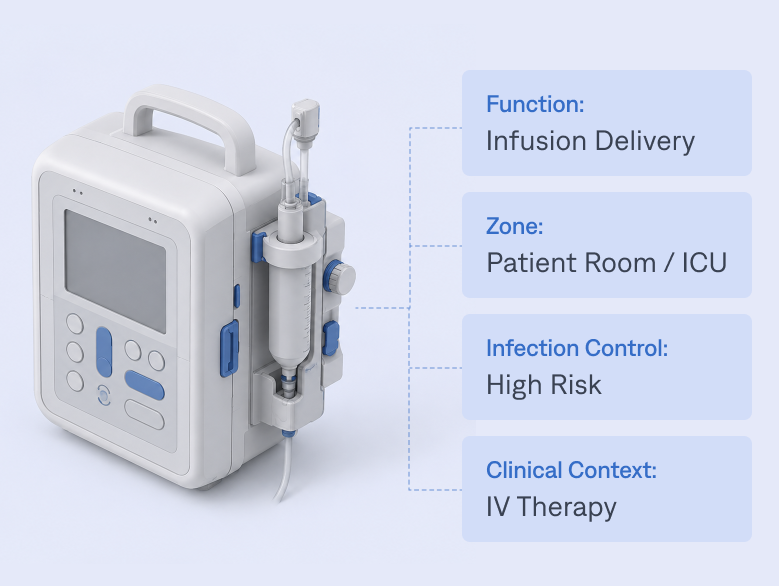
An infusion pump is no longer just a mesh. It becomes a clinical asset with a function, a location, an infection control class and a clinical context.
More than geometry:
a Clinical Knowledge layer
A photorealistic twin is geometry. L37 binds that geometry to a clinical-operational ontology held in a knowledge graph, so every object, zone and workflow carries meaning a robot can reason over.
An infusion pump is no longer just a mesh. It becomes a clinical asset with a function, a location, an infection control class and a clinical context.
/01
Objects carry meaning
Function, taxonomy, zone and clinical context — not just shape.
/02
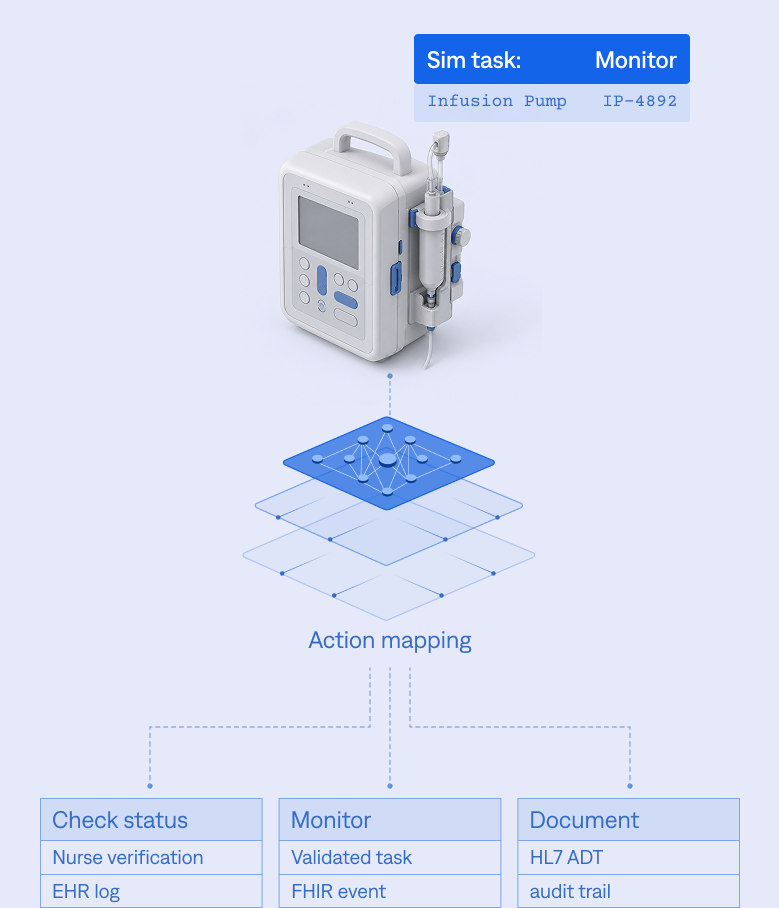
Actions map to care
The same ontology links a validated robot task in sim to the real clinical workflow it serves.
/03
Engine-agnostic
The knowledge graph travels with the twin regardless of OEM or runtime.
Editions
Three editions. One platform, scaled to your programme
Start at the scope your programme needs today and expand on a delta; you never re-license
Facility scale
L37 Foundation
Build and operate a facility-wide twin for planning and capacity.
Includes:

Facility management twin
HVAC, MEP & patient flow
Surge & capacity modelling
Rapid CAD-first onboarding
Standards-based twin export
Robot training & validation
MOST CHOSEN
L37 Navigator
Train and validate mobile robots across departments.
Everything in Foundation, plus:
AMR corridor navigation training
Logistics & pharmacy automation
Department-level layouts
Sim-to-real Validation Report
Synthetic-data simulation
Surgical & regulatory grade
L37 Enterprise
Surgical-grade training, packaged with regulatory evidence.
Everything in Navigator, plus:
Surgical robot training
ASME V&V40 evidence packs
Dedicated clinical accuracy validator
Custom domain randomisation
SLA-backed twin maintenance
Department add-ons, OEM training licences and co-development engagements available — ask your Solutions Architect.
ROI
Lower total cost, faster to value, no team to build
Building a hospital twin in house is a multi year project with scarce talent, heavy upfront investment and constant upkeep as the facility changes. A subscription delivers the same twin in weeks, at the level of detail your robot programme needs, and keeps it current.
Build it yourself
Upfront
Major capital project
Ongoing
Continuous rebuilds as the facility changes
Time-to-value
12–24 months
L37 subscription
Upfront
Light setup, in weeks
Ongoing
One predictable operating cost
Time-to-value
weeks
Build it yourself
Upfront
Major capital project
Ongoing
Continuous rebuilds as the facility changes
Time-to-value
12–24 months
L37 subscription
Upfront
Light setup, in weeks
Ongoing
One predictable operating cost
Time-to-value
weeks
THE OUTCOME
Subscribe, don't build
Far lower
total cost of ownership
10×
faster to value
Zero
in-house team needed
SIM-TO-REAL VALIDATION
Every twin ships with
auditable evidence
Before you rely on what the twin tells you, we prove it matches your real facility. Every twin ships with a signed validation report, an auditable record of how closely simulation reflects reality, structured to support your robot partners' regulatory work, never to overstate it.
/01
Core task battery
What we test
A standard suite of navigation, manipulation and handover tasks run across the full twin before any robot goes near a patient.
/02
Sim + real
How we prove it
Each validated task is mirrored on real hardware in a matched physical environment so simulation accuracy is measured, not assumed.
/03
Measured
A score, not pass/fail
Task success rate, trajectory deviation, reaction to clinical interruptions and edge cases are all logged and scored against acceptance criteria.
/04
Varied Conditions
Real variation built in
Lighting changes, patient equipment, staff presence and surge layouts are applied systematically so the twin proves robustness, not just baseline performance.
FAQ
The questions hospitals and clinics ask first
If yours isn't here, ask us directly; we answer every question in detail on request.
Robots, automation and complex workflows carry risk. A digital twin lets you simulate, train and validate everything in a photorealistic replica of your facility before anything operates near patients. It cuts the time and cost of change management, reduces the chance of incidents, and gives you a persistent asset you can use for planning, staff training and regulatory evidence long after go-live.
The physical capture phase requires access to your facility, but it is designed to be done in short windows, after hours, or in unoccupied areas. Most hospitals complete capture in two to four days. After that, the twin exists entirely in software, so ongoing work is invisible to your staff and patients.
No. L37 delivers and maintains the twin as a managed service; you do not hire simulation engineers, buy licences or build infrastructure. Your team interacts through a dashboard and review sessions. We handle updates as your facility changes.
You own your facility data. L37 processes it under a data processing agreement, stores it in encrypted, access-controlled infrastructure, and never uses it to train models or share it with third parties. We can work within your data residency requirements for most major regions.
For most Foundation and Navigator customers, the twin is live and usable within eight to twelve weeks of contract signature. The first Validation Report typically follows within two weeks of twin delivery. Enterprise engagements with surgical robotics or complex regulatory evidence may run to sixteen weeks.
Get in touch
Ready to see your hospital
Book a 30-minute discovery call with an L37 Solutions Architect. We'll look at your facility and your goals, and walk you through how a digital twin would work for you.